Land
The Land: Where Every Vintage Begins
Every bottle begins long before the cellar. At Château Aarav, it begins with the landscape, soil, climate and character of the Eastern Himalayan foothills.
August 19, 2026 · 6 min
Land
August 19, 2026 · 6 min
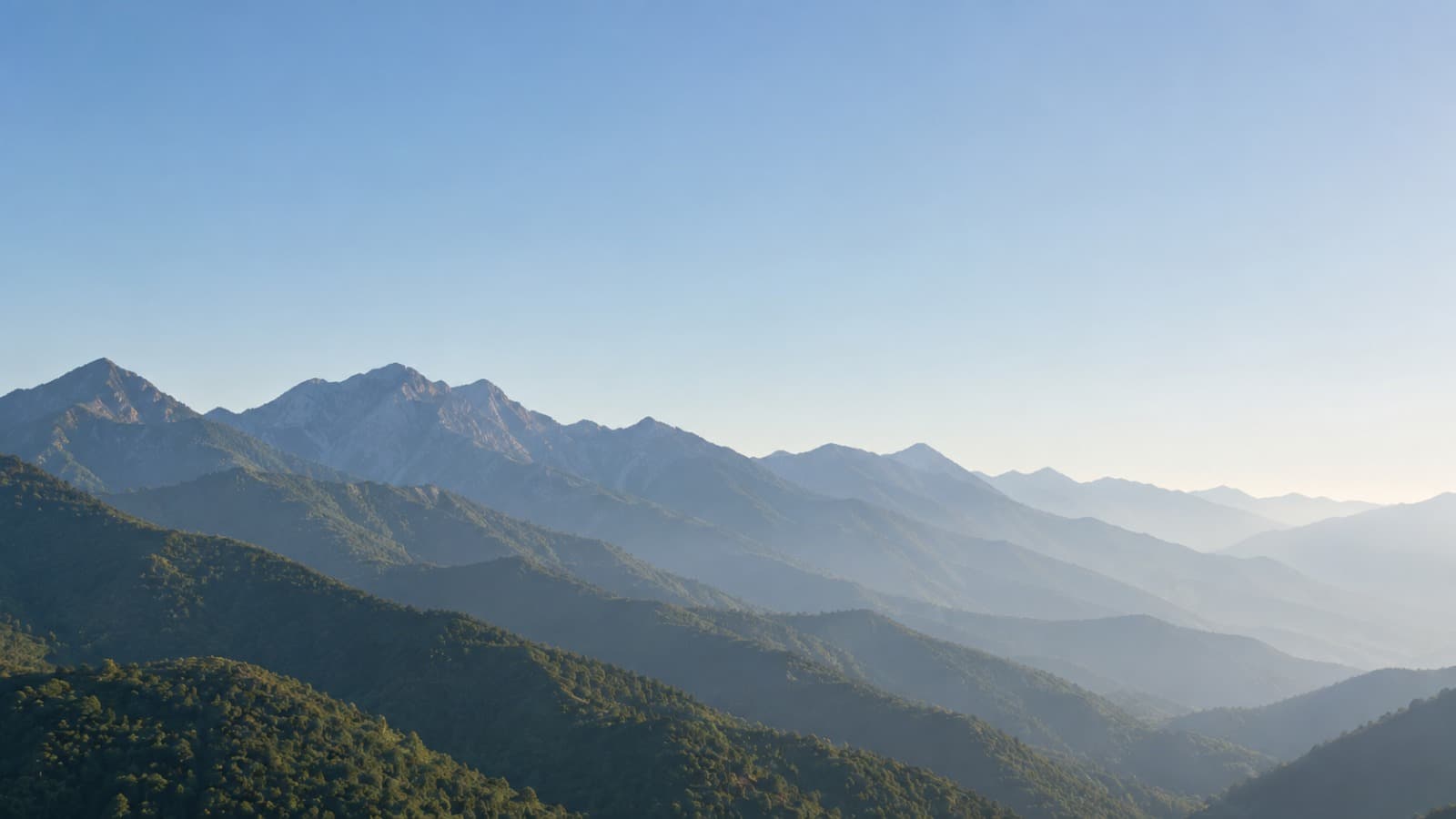
Every wine begins somewhere. For us, it begins in the Eastern Himalayan foothills of Pedong, Kalimpong, West Bengal.
When we began imagining Château Aarav, we were not looking for a place simply because it was beautiful. We were looking for a place with character — a landscape that could teach us something, challenge us, and perhaps one day express itself through wine.
Our estate sits along Upper Cart Road in Pedong, at approximately 1,240 metres above sea level. Around us are rolling mountain landscapes, forests, fresh mountain air and changing seasons. The altitude brings cool mountain nights and moderate daytime temperatures, creating conditions that encourage a slower rhythm of ripening.
The Eastern Himalayas are not a traditional wine region in the way Burgundy, Bordeaux or the Mosel are. That is precisely what makes this journey meaningful to us. We are not here to recreate another wine region in India. We want to understand what this landscape can become in its own right.
Terroir, for us, is more than a word used to describe soil. It is the relationship between geology, soil, climate, altitude, rainfall, biodiversity and the people who care for the vineyard.
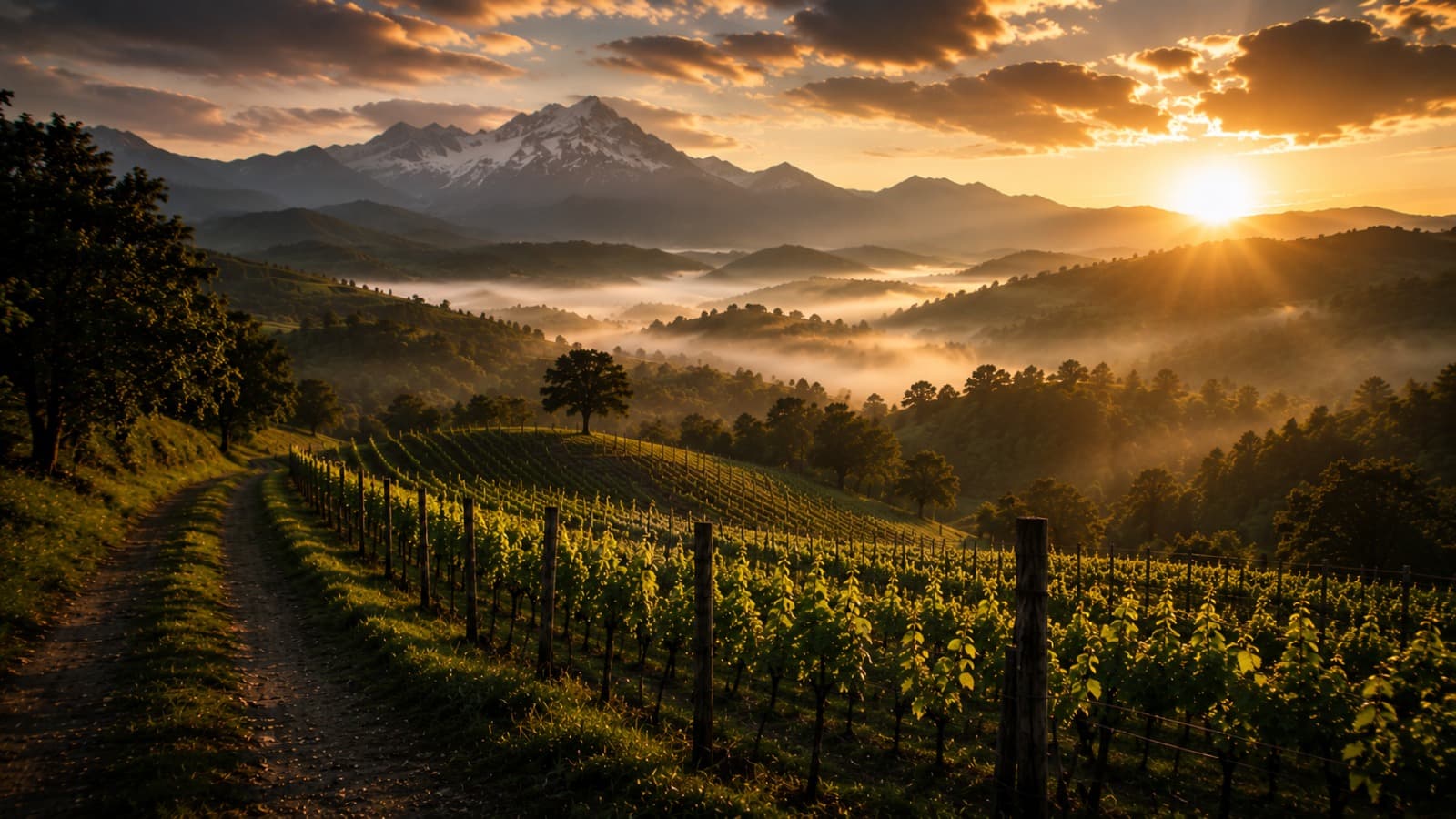
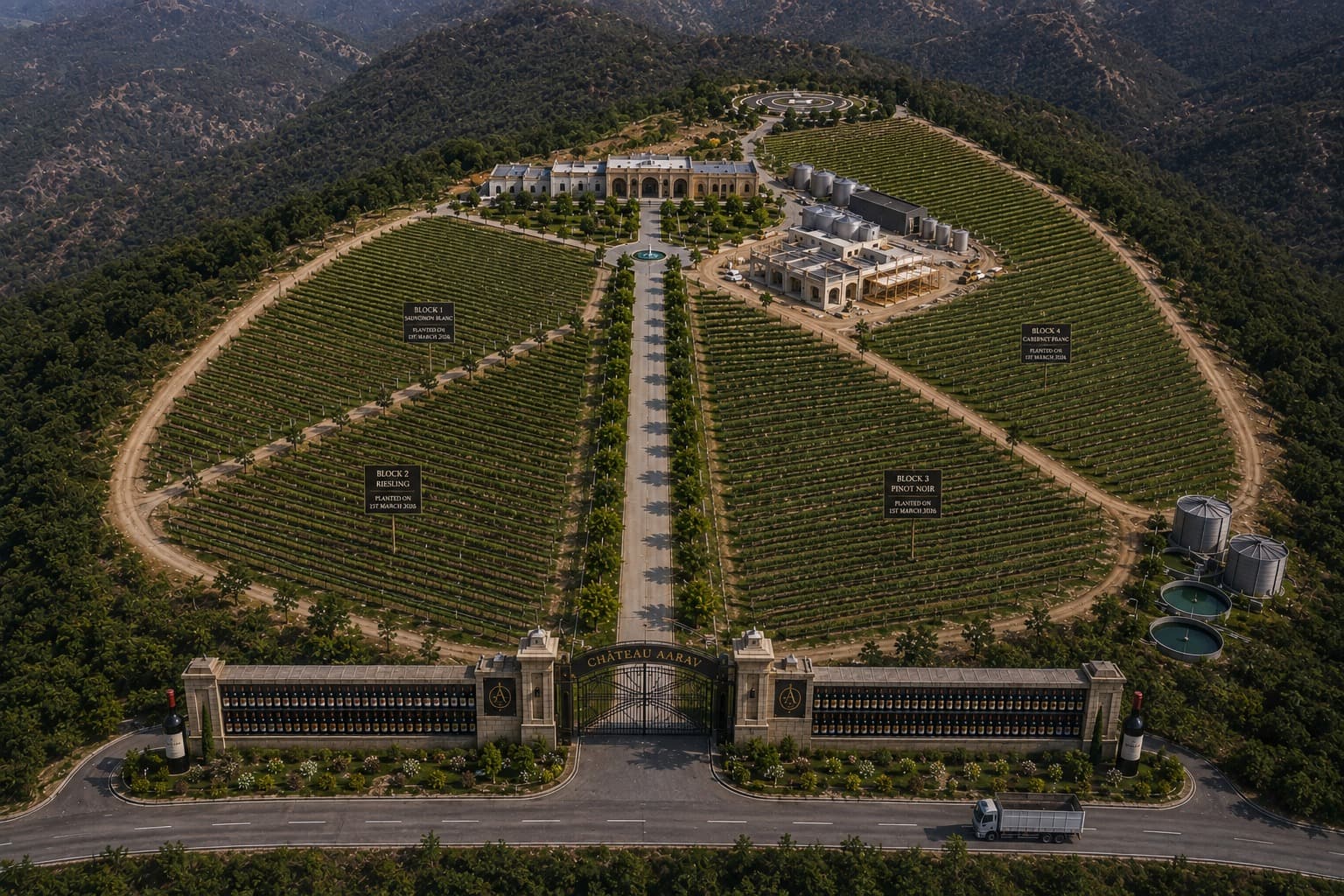
Our vineyard is approximately two hectares and has been divided into four individual blocks. Pinot Noir occupies the Founder Block, Sauvignon Blanc the Morning Mist Block, Riesling the Mountain Breeze Block, and Cabernet Franc the Legacy Block. Each variety has been selected with the belief that it can contribute something different to the identity of the estate.
The climate is an important part of that identity. Cool mountain nights can help preserve natural acidity while allowing the grapes to develop gradually. Fresh mountain airflow, seasonal changes and the region's rainfall all become part of the rhythm of the vineyard.
“We are not trying to recreate another wine region. We are waiting to discover what our own land can become.”
The monsoon is both nourishment and a challenge. Rain replenishes the landscape and supports biodiversity, while responsible vineyard management requires us to think carefully about canopy management, drainage and soil health.
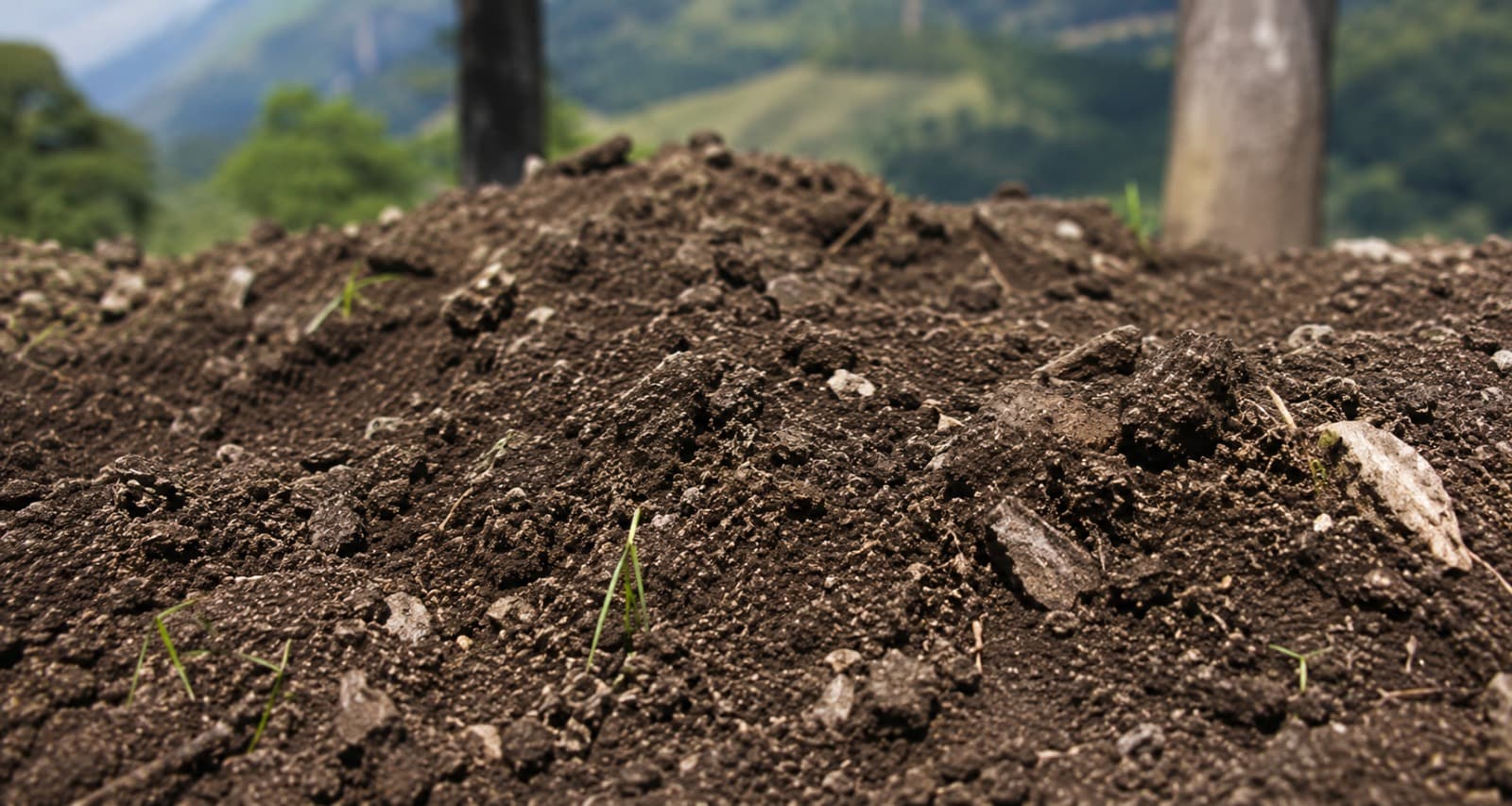
Beneath the vines lies another part of the story. The wider Eastern Himalayan landscape is shaped by ancient geological processes, with weathered rock, stone fragments and forest-derived organic matter contributing to the soils around the estate. As the vineyard matures, we will continue studying each block to better understand its individual character.
But a vineyard is never only about vines. Forests, birds, insects, native vegetation and the surrounding ecosystem are all part of the living landscape. Our approach is therefore not to separate the vineyard from nature, but to understand how cultivation can exist responsibly within it.
Today, our vines are still young. They are establishing their roots, and our first harvest is expected around 2030. There is no finished wine to show yet, and we are comfortable with that.
We believe the first responsibility of a young estate is not to produce quickly, but to build well. Healthy vines, healthy soil and a deeper understanding of the land must come before the first bottle.
One day, when we open a bottle of Château Aarav, we want its story to begin before the wine reaches the glass. We want it to carry something of the mountain air, the changing seasons, the patience of the vineyard and the place where it began.
For now, we are listening, learning and allowing the vineyard to find its rhythm.
The story of Château Aarav has only just begun.
Continue Reading
Land
Every bottle begins long before the cellar. At Château Aarav, it begins with the landscape, soil, climate and character of the Eastern Himalayan foothills.
August 19, 2026 · 6 min
Land
Terroir is the invisible fingerprint of a vineyard—the relationship between land, climate, soil, altitude, biodiversity and the people who care for it.
August 19, 2026 · 6 min
Estate
A dream that began among the vineyards of California eventually found its way home to the Eastern Himalayas, becoming the foundation of Château Aarav.
August 27, 2026 · 8 min